Ratings: 4 Stars
I have often glossed over news headlines like, ‘Apple releases security updates to patch two new zero-days…’ First, because I hardly understood what it meant or what its implications were given my chemical engineering and sales background. Second, it represented a world far, far away and themes far more outlandish – Russia hacking their way through Ukraine’s power grid or some central agency tapping into Rahul Gandhi’s iPhone through a spyware named after a mythical winged horse. Cybersecurity hardly ever registered something more than a ‘ping’ in my head even when it was screaming through the front page of the newspaper. What’s more, I am regularly frustrated when Windows decides to update the software in my laptop (wasting my time in the process) without my permission. Though I loved ‘Die Hard 4’ – and found the idea fascinatingly dreadful of how somebody can spread absolute havoc in a metropolis through code.
Of how somebody can hack into your traffic signals to cause accidents, can enter your neighborhood nuclear reactor and spin the centrifuges out of control, of how you no longer need a hijacker to bring down a plane, of how you can wipe out credit records of all customers from a bank, of how you can try to interfere in the national election of a developed nation?!!
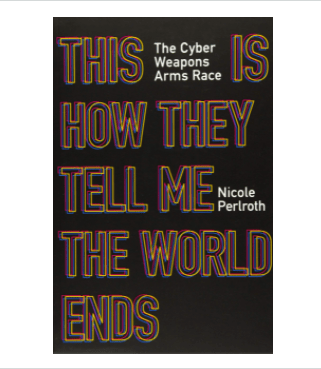
Things that can only happen in a movie, right? Wrong! And that’s why reading ‘This is how they tell me the world ends’ by Nicole Perlroth has been an eye-opener. Before reading this, cybersecurity to me meant being vigilant against the Nigerian Prince who was in dire straits and needed my help. Cybersecurity meant wearily complying with the overzealous IT department in my company who warned and probed me to never drop my guard against phishing emails. After reading this book, I realized that this subject was not to be taken lightly. There were nation-states at play – outbidding each other in buying zero-day exploits that allowed backdoor into your crucial infrastructure (healthcare, power sector, telecom) to cause chaos and destruction. Of how nations were snooping at their own citizens to curb dissent/criticism!
Amazing, how a book can broaden the horizon of your mind!
Though repetitive and dramatic at times, this book is must-read. From espionage to cyber-espionage, the world has indeed moved closer to the brink of disaster as with digitization and IOT – everything is coming online. You no longer need to throw a nuclear warhead at your enemy, just a few well-timed digital exploits can bring the nation down.
 Alienman