‘Prithviraj Chauhan’ is by far, the best work of Anuja Chandramouli. Extensively researched, fast-paced, action-packed and full-bodied page turner which marries history and mythology, this helluva book chugs along at the speed of bullet train.
Impersonal mythical retelling, no more! Show, not tell, right? While Anuja’s books have always been engaging and well-written, I always felt that they keep the readers, 10 feet away from the action. But this one reads different, this one moves away from narration and into live-action. Yet, Anuja maintains the sign of a reliable historian/researcher. The myth-making doesn’t precede fact. The author doesn’t give in to cloying hero-worship/romanticism, and is extremely disciplined in her approach towards the subject.
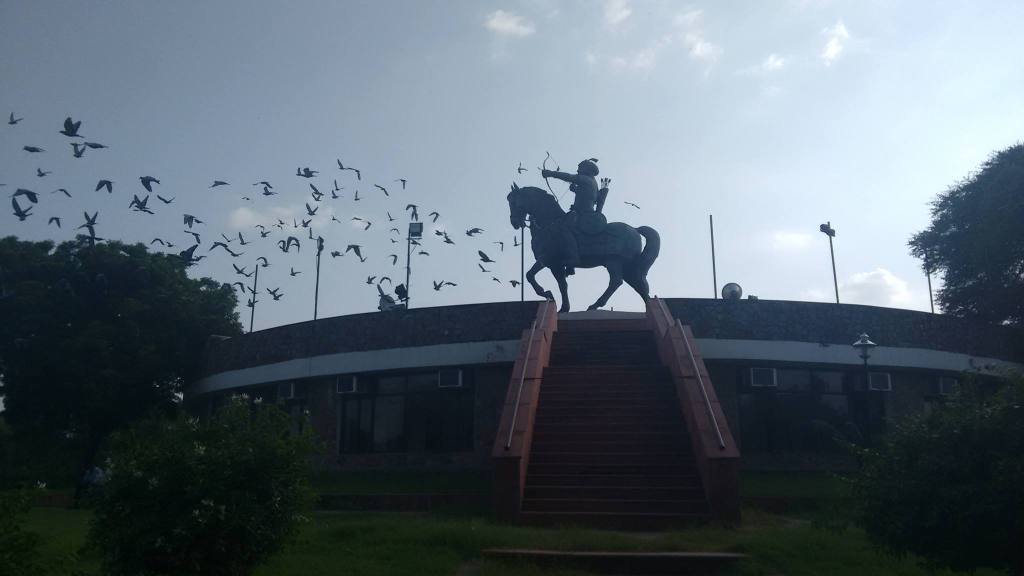
Prithviraj Chauhan – the last Hindu king to hold Delhi. Paeans have been sung, stories have been written, prime-time TV has aired a longish tear-jerker, he has also found his way in politicians’ speeches. The profligacy of the praise notwithstanding, even if we were to take his story with a pinch of salt – Prithviraj Chauhan was a remarkable being. He had to be the first successful expansionist after Ashoka – right on top alongside Akbar and the British. Had he lived long enough (if he had been successful in killing Muhammad Ghori in the first battle of Tarain itself), he might have brought the entire sub-continent under one rule. He would have been a kind and a tolerant king, and his subjects would have lived in relative peace. But for fate and its inequity, where ‘what ifs’ have no scope for existence! All he was successful in doing was consolidating major centers of power in India and hand it over a platter to the subsequent Muslim rulers. Had he not been an effective consolidator, Ghori would have had to do a lot more fighting with lot many rulers, it would have taken him much longer to wrest control of India and it might again have turned the tide of history.
Also, the fact that we never learn from history. The Mughals repeated the same mistake that the Hindu kings in the time of Pritviraj Chauhan did. Infighting, regicide, fratricide, patricide and petty selfishness – the Hindu rulers failed to consolidate their might against their common enemy, the Muslim invaders. Similarly, Mughals couldn’t stop the march of British invasion due to petty differences and a thirst for power which lead them to kill their own brothers and sisters. They would rather hand over the land to a foreign intruder than make amends with their neighbors. Divided, we always fall. A united front would have prevented both the conquests! But incorrigible me, I am again thinking in terms of ‘What ifs’!
What is refreshing about this book – is the utter absence of adulatory myth. Chauhan never let go Ghori out of kindness in the first battle, Ghori escaped after a fatal blow landed on his person and survived. It would be an insult to the brilliant tactician in Chauhan, which lead him to expand the frontiers of his rule in India, had he let go of him out of such a naïve, childish reason. Also as a king he took certain decisions that doesn’t entirely paint a pretty picture. History reveals that everyone has shades of grey, even the noble Prithviraj Chauhan.
This book is a remarkable feat. Hope my school history texts read like this!
Book Review: Prithviraj Chauhan
No comments on Book Review: Prithviraj Chauhan
 Alienman