“Of all human conditions, perhaps the most brilliant and at the same time the most anomalous, is that of the Governor General of British India. A private English gentleman, and the servant of a joint-stock company, during the brief period of his government, he is the deputed sovereign of the greatest empire in the world; the ruler of a hundred million men; while dependant kings and princes bow down to him with a deferential awe and submission. There is nothing in history analogous to this position…”
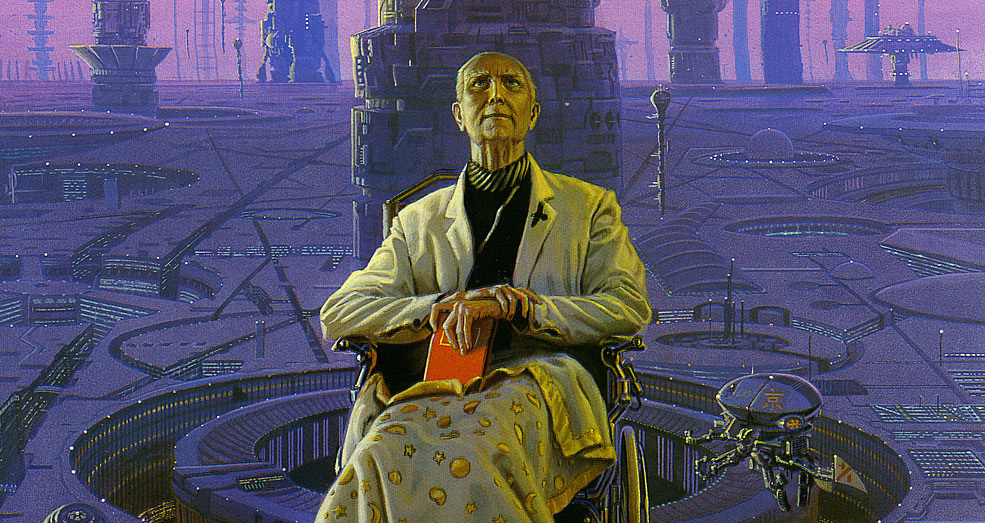
I was struck by the similarity between the role of Governor Generals, before the 1857 uprising, in Pre-Independent India and the merchant princes appearing in Foundation, a gem of a science-fiction book written by the master story-teller Isaac Asimov. Well, Psychohistory has to take into account the collective history of mankind for it to draw any kind of inferences which may be used to nudge the future course of the mankind in the direction any well-meaning demagogue/leader wants. Hari Seldon was unaware about the existence of Earth, much less the history of the Indian subcontinent. At best he had heard rumors of the existence of the ‘source planet’ among many others; he was more guided by the social and historical trends of his time. All this discussion is academic. Isaac Asimov wasn’t unaware about the other empire, the one which has the Union Jack as its flag.
And I believe, true to the spirit of Psychohistory, he draws heavily from the actual historical incidents that took place, to form this grand saga. While the British weren’t particularly bound by the nobler purpose of the the First and the Second Foundation situated at the opposite arms of the Milky Way, that is to stunt the thirty thousand years of turmoil and chaos resulting due to the fall of the Empire and reducing it to a single millennium and build a second Empire, which has a kinder deposition towards its denizens – they were simply more interested in loot and stashing their pockets on behalf of their shareholders; all I wish to point out is the economic clout that these traders, real or speculative, exerted over people with no access to modern technology.
Industrial Revolution galvanized Europe, mainly, England. Communication and transport were becoming faster and less cumbersome. An array of products were invented which made the life of average Englishman much easy. To fuel this revolution and keep the engine of growth, pumping, they needed raw materials. They colonized India, among other countries. While the same can be said about the Foundation and its subsequent colonization of the outer regions of the galaxy, theirs was a conscious decision in order to bring their galaxy out of the turbulent wake following the fall of the Empire.
Both lured the to-be-colonized with technology. The Mughal Empire was on a decline. The in-fighting between the royal princes out for each other’s heads, upstarts rising against the crumbling empire, new power centers erupting everywhere across India – proved to be the breeding grounds for the Europeans, who acted as military strategists for the pouting princes’ armies, equipping them with advanced weaponry to fight their battles against their brothers. The growing dependence of these princes on the Europeans proved to be their bane. They lost power and the army. Askone and Korell realized the same, to its chagrin, in the Foundation.
The idea of Psychohistory is potent. Asimov may not have actually drawn his material from India’s history (though I doubt that he wasn’t aware of the ongoings in the country, as this book as well as its five story format preceding it, was published around the same time as of India’s freedom struggle and its subsequent independence), but history is awash examples with similar historical trends. After all, we weren’t the only country to be colonized. The religious crusades, the technological supremacy, and treachery of Economics – the cycles repeat, boom and bust, crest and trough. There is a reason why America is a superpower. There is a reason why the modern conflicts occur.
And they might happen again. We lack the foresightedness, we are individually selfish, globally foolish. This is a zero-sum game. And Psychohistory may prove to be an important tool, which if properly applied can propel us into the space and beyond, a win-win scenario after all!
P.S.: For those who realized what I did in the last paragraph- :-p :-p
 Alienman